Artwork © Blizzard EntertainmentClassic baseline · Forever beta stories
Timeline
During the race to IcecrownA Dragon Bound to the Scourge
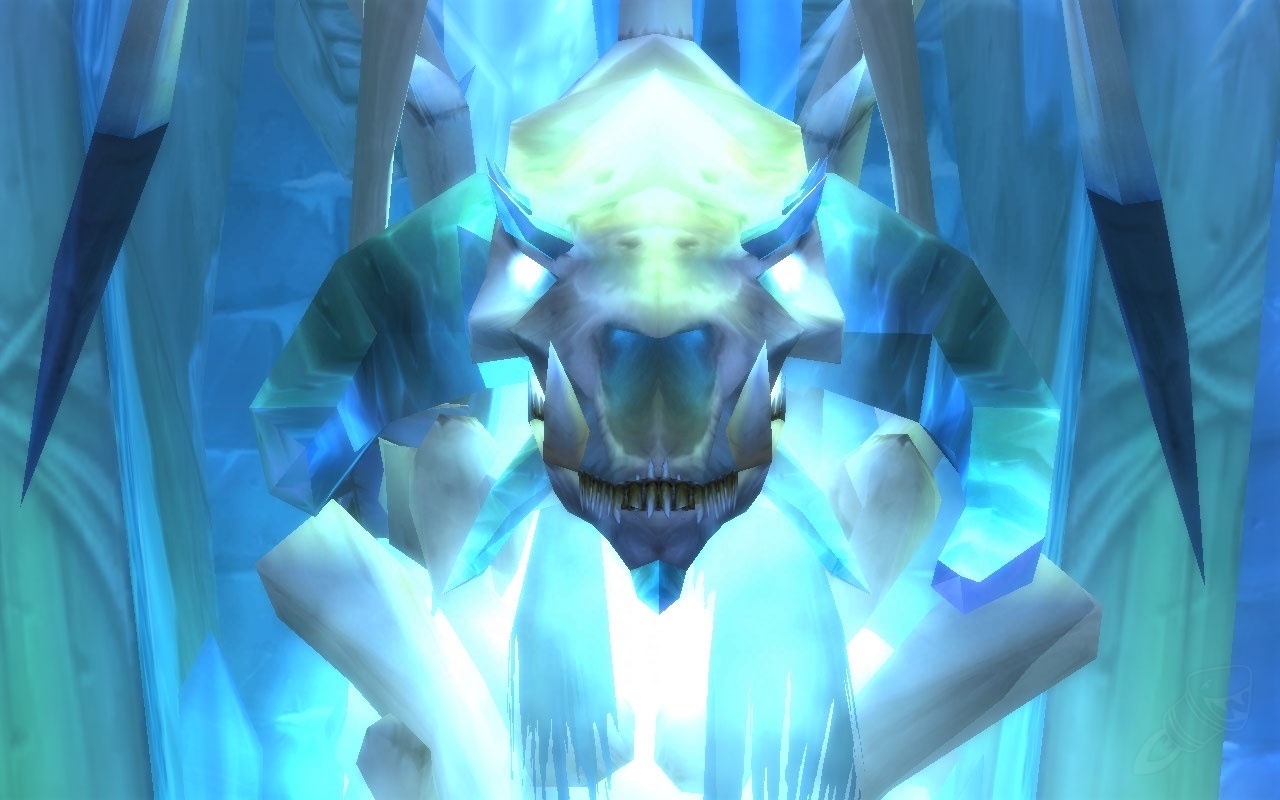
As Arthas hurried to reach his endangered master, Anub’arak suggested raiding the hoard of Sapphiron. The dragon’s artifacts could aid their passage through the north. They entered his lair as enemies, killed its defenders and took what they had come for.
Arthas did not leave the dragon dead. Though his power was weakening, he raised Sapphiron as a frost wyrm. The new servant helped clear the road toward the underground passage, but remained outside when the army entered the confined tunnels.
That encounter left a guardian the Scourge would use again. Sapphiron’s later presence in Naxxramas began with this act of conquest during the march to the Frozen Throne.
Sources (1)
Victory Without an Ending
Above the Plaguelands, Naxxramas brought the surviving kingdom’s enemy into a single fortress. Kel’Thuzad commanded the necropolis, while its four quarters trained soldiers, maintained monstrous constructs and turned disease into a weapon. The Cult of the Damned helped sustain the power that had already ruined Lordaeron.
The assault passed through the Military Quarter and its Four Horsemen. The original roster included Alexandros Mograine and Sir Zeliek, whose forced service showed what the Scourge could make of its former enemies. Beyond the wings stood Sapphiron, guarding the route to the lich.
The attackers defeated Kel’Thuzad, but his body was not the whole of his existence. A surviving phylactery left the apparent victory dependent on what happened to the object carried out of the fortress.
Sources (2)